Role

Owning the product strategy

Scheme is a sourcing marketplace connecting interior designers with premium, independent makers trusted by the industry's leading names. As co-founder and the only product person, I lead product strategy and design, from the first ecosystem map to the live platform. The three examples below show what that has involved, from choosing where to start and building a product that strengthens as it grows, to refining the business model.

Role
Co-Founder, Product
Company
Scheme
Dates
2024 to present
Remit
Team of five, only product person
The Scheme homepage: a warm, panelled living room with a large framed painting and cream boucle armchairs under the headline "Find the pieces worth sourcing"

Examples of the work

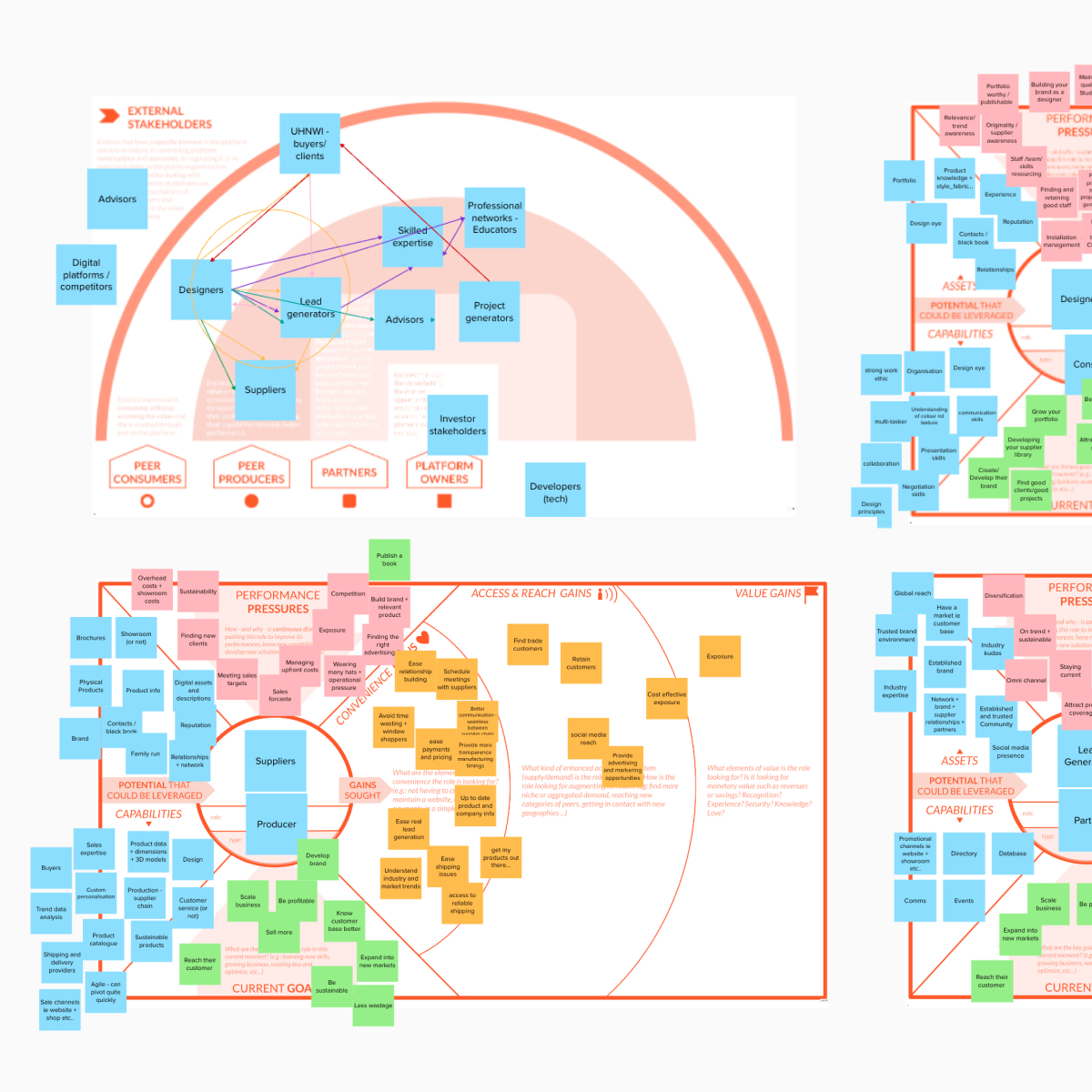
Ecosystem mapping workshop boards: a stakeholder map of the interior design market with designers at the centre, alongside value exchange canvases for designers, suppliers and producers covered in sticky notes on pressures, gains and capabilities

Strategy

Brand discovery first

The work began with a map of the interior design ecosystem: every participant, and where value moved between them. Together with early market research, it pointed to the exchange between designers and suppliers as the one to build around. Sourcing and procurement tools looked like the obvious problem to solve. From building platform tooling at Farfetch, I knew this was the hardest route, and it gave designers no reason to engage in the first place.

Content became the way in instead, solving the first pain point in the journey, vetted brand discovery. Designers share their sourcing knowledge and get content back that builds their visibility. That decision set the order for the rest of the product.
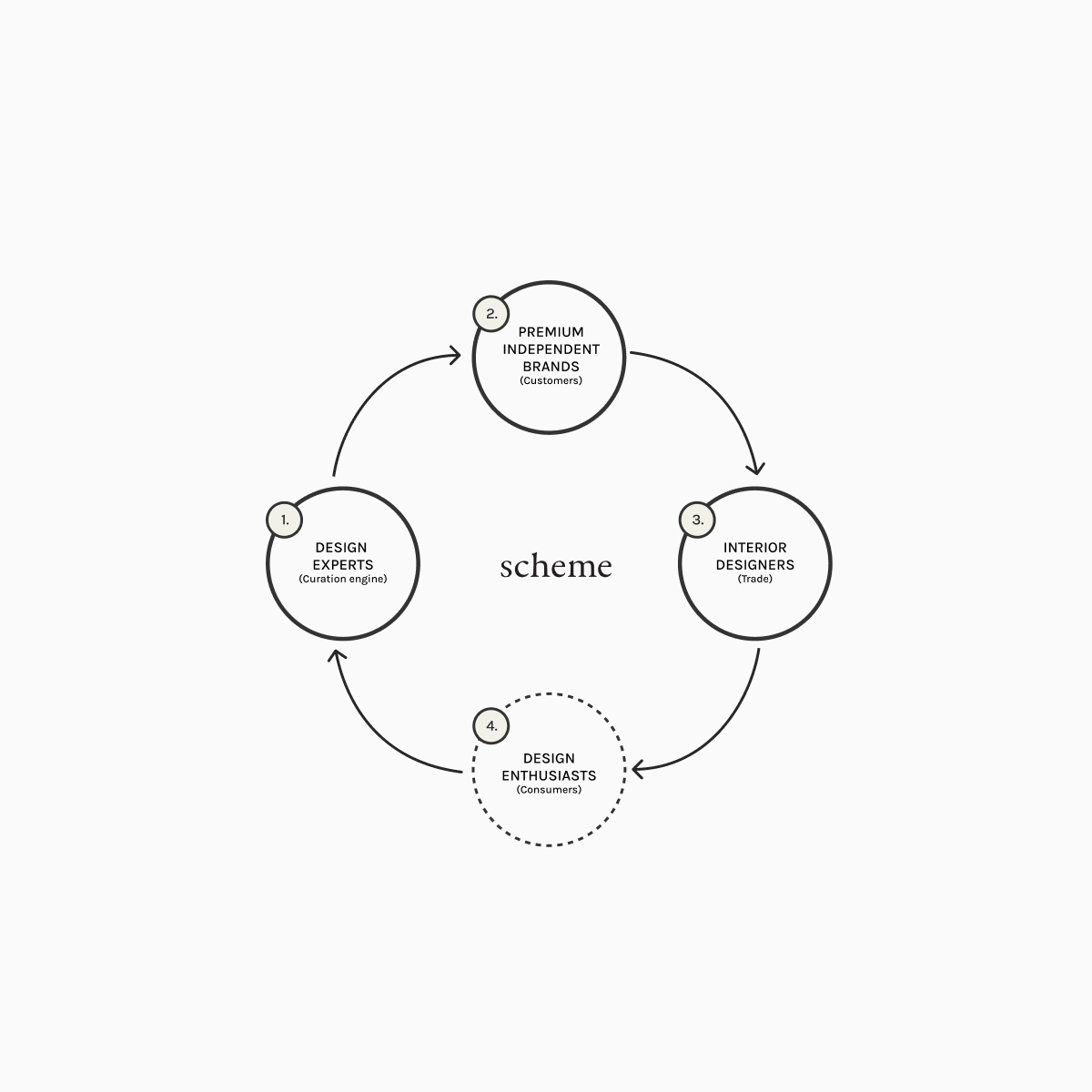
The Scheme curation loop: design experts share the brands they work with, vetted brands join to be discovered, interior designers adopt the platform to source in one trusted place, and the curated range draws in design enthusiasts, which feeds back to the experts

Product

A curation loop that grows with every designer

Taste and credibility are hard to copy, so the product was built around curation rather than search or aggregation. A group of established, award-winning designers share the brands and pieces they rely on for real projects. Vetted brands join to be discovered and specified. Designers adopt the platform because it solves sourcing in one trusted place. And the curated range draws in design enthusiasts who want the same quality without trade connections.

Each side strengthens the next. Strong designers attract brands that want to be in good company, and a better mix of makers draws more designers in.

“We don't really do selling. It's more opening conversations, and that's how I see Scheme.”

Naomi Paul, brand partner
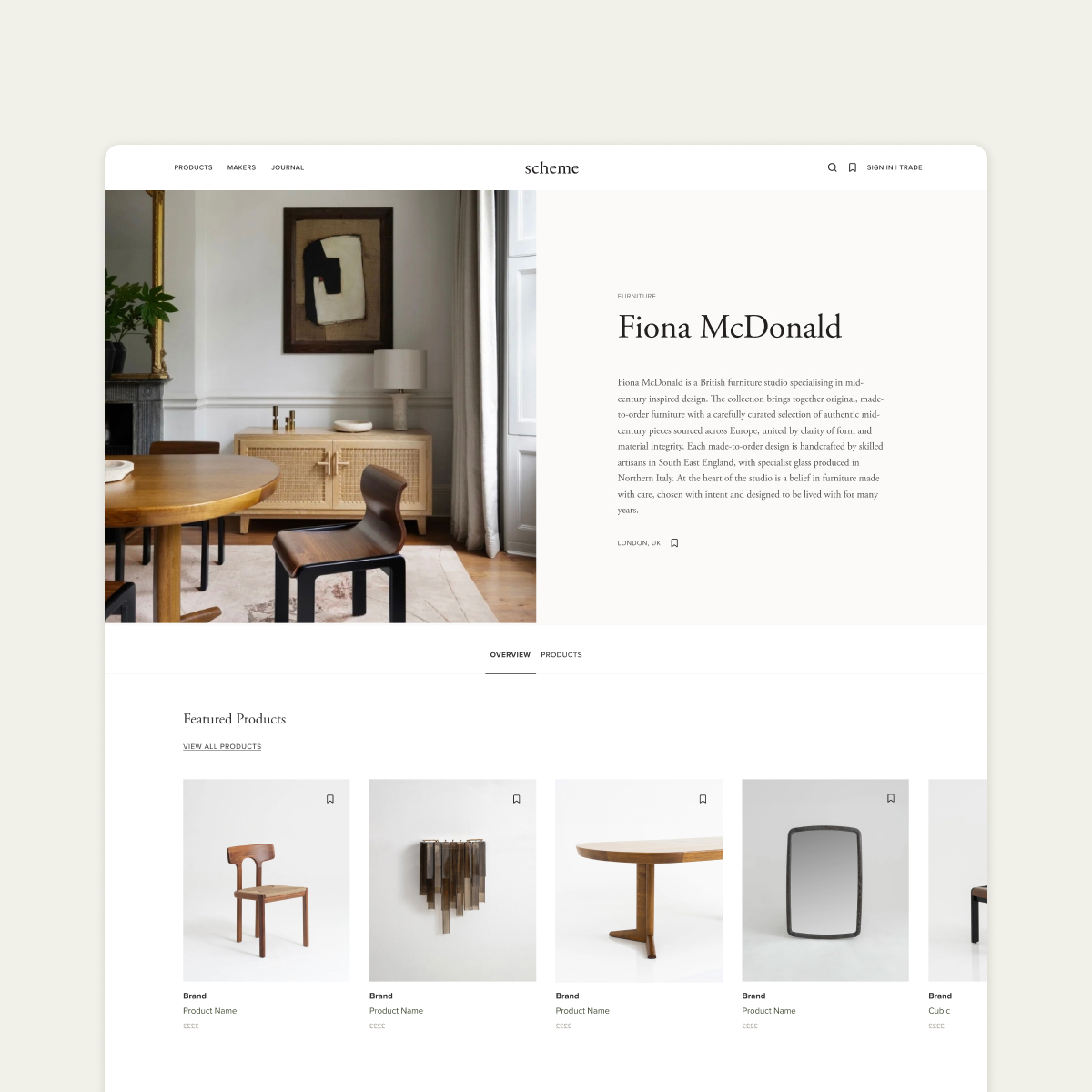
A brand page on Scheme for Fiona McDonald, a British furniture studio: a dining room photo beside the studio's story, with featured products below

Business model

From affiliate clicks to brand subscription

Scheme launched on an affiliate model, the leanest way to test two questions: would designers share the suppliers they actually use, and would that become content an audience engaged with?

Testing brought two constraints to the surface early. Affiliate networks don't work with unproven platforms, so Scheme became its own publisher. And the pieces designers most wanted to endorse were enquiry only and made to order, which commission could never monetise.

The more important finding was that designers valued the content more than the commission. That made the case for brand subscription, and Scheme relaunched as a subscription model within a year of launch.

Outcomes

  • 50+ brand partners
  • 96% brand partner retention in year one
  • Founding cohort includes House & Garden Top 100 designers

Where Scheme is today

Scheme is live as a subscription platform connecting interior designers with premium European makers. Brands join by invitation only, and they stay. Retention has held even with marketing budgets under pressure across the industry. Continuous research with designers and brand partners keeps the model grounded in how designers actually source.

Back to all work